BuyingMarketsMy Monthly Market SummarySelling March 18, 2025

It’s a Buyer’s Market. Why aren’t prices crashing? 3-17-2025

It’s a Buyer’s Market. Why aren’t prices crashing?

Could Economic Uncertainty Help the Housing Market?

For Buyers

Phoenix has been in a buyer’s market for 3 out of the last 4 months, and it’s continuing into March as of this writing. Some buyers may be surprised to see price measures aren’t showing a decline yet, in fact the median is up 4.3% over last year. Price measures take at least 3-6 months to crack after a shift in the market, and that shift needs to be in effect for at least a season before it starts to hit the price line.

Why does it take so long? For a number of reasons, but one is the length of the sale. When selling a home, first the seller needs to list it on the open market and possibly wait 30 days before accepting a contract. Then after another 30-45 days in escrow, the price finally records. Then in order to establish a trend, two more months need to be established to show a measurable decline in price. Stocks, in contrast, can be sold and recorded at the push of a button, so volatility and price responses are instantaneous, and crashes are common.

This is only the 4th buyer’s market for Greater Phoenix over the past 25 years, and the one from 2006 -2008 was a doozy that ignites PTSD for those who suffered through it. Because the housing crash coincided with the Great Recession of 2008, there are some who believe home values are set to crash if another recession should occur in the near future. Historically, this theory is not supported. Typically home values go flat and boring during recessions, or barely rise. Ironically, buyer demand for homes increases during recessions because mortgage rates typically decline. Measures today suggest prices could decline in the coming months if supply continues to rise, but more like a coast or glide, not a crash.

Most price ranges are currently averaging somewhere around 1-2% appreciation year-over-year, which is less than the rate of inflation. However, condominiums and townhomes under $400K are seeing the most notable declines in value, down -4.2% so far this month, while those between $1M-$1.5M are experiencing the strongest growth at +5.5%. Under these circumstances, any drop in mortgage rates will have significant impacts on a buyer’s purchasing power.

For Sellers

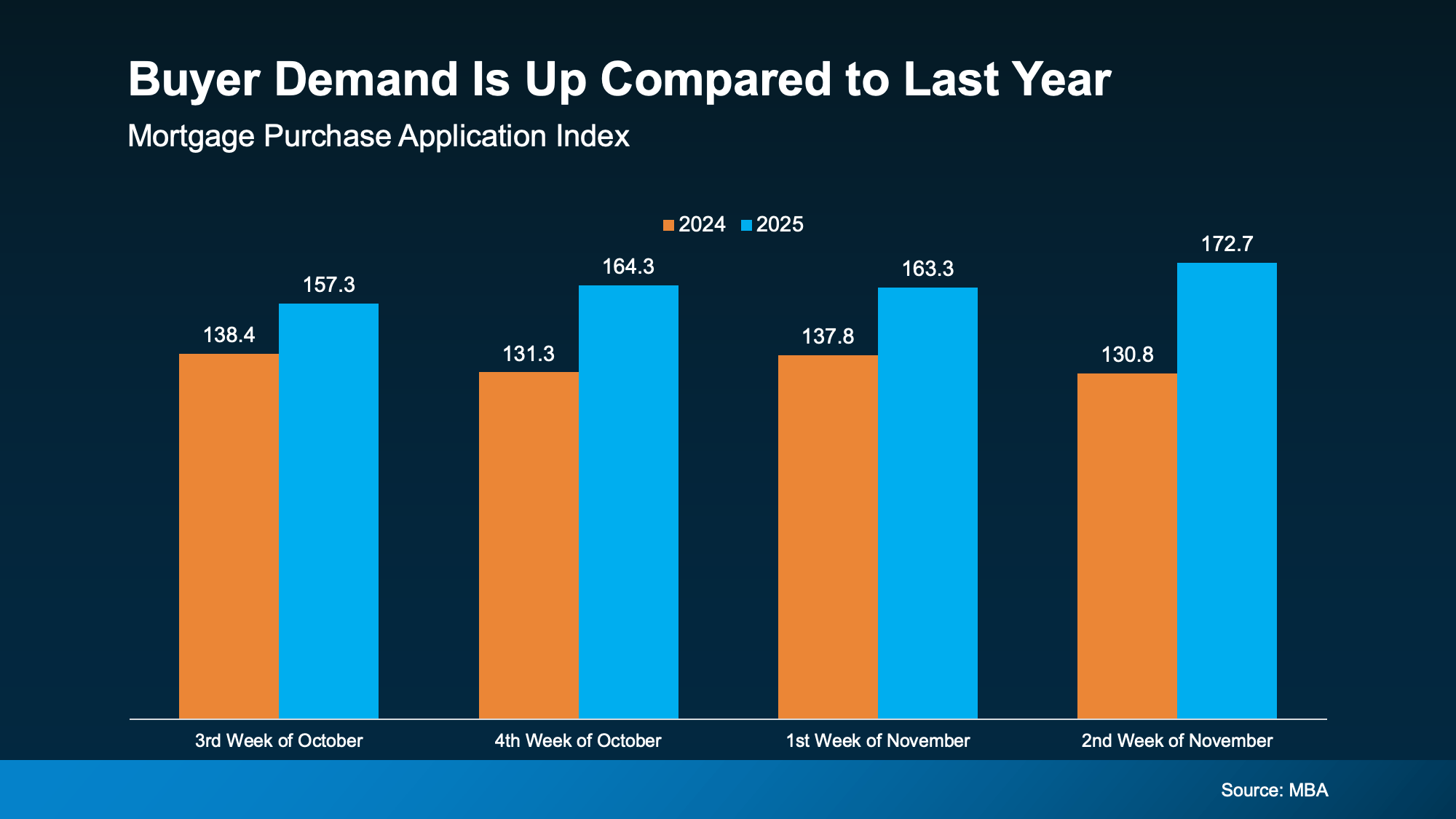
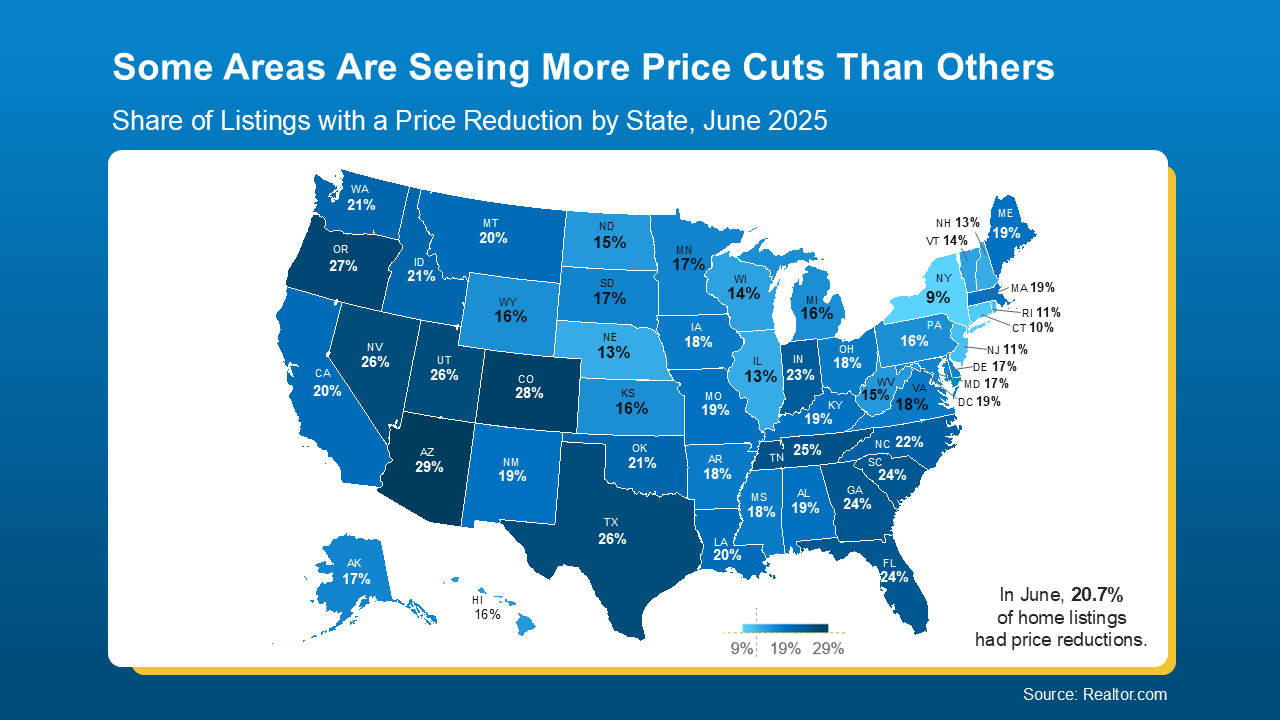
Today’s buyer’s market is not due to falling buyer demand. The Cromford® Demand Index is actually rising at the moment. It’s rising supply that’s causing sellers added stress. So far in this year, the Arizona Regional MLS has seen more new listings added to supply than it has in the last 4 years, and the highest total count of active listings since 2015. While buyer demand is improving, it’s not enough to absorb this many added listings. The byproduct is a spike in price reductions over the past 4 weeks (up 58% over last year) and stronger buyer negotiations, even for homes in perfect condition.

The average list price per square foot tells us that sellers are not pushing the market on price as much as they used to, with measures by price range mostly within 1% of last year, give or take. But added pressure from increased competition is causing some sellers to go the extra mile just to get an offer. That could mean staging their vacant home, or neutralizing paint, upgrading appliances, or more.

Once they get the offer, price negotiations are shaving off a tad more than they did last year as well. The average price negotiation for listings under $1M is running at 98.3% of the last list price, down from 98.6% last year. On a $500,000 purchase, that’s a negotiation of $8,500 off the sales price vs. $7,000 last year. Negotiations over $1M are averaging 95.4% compared to 96.4% last year. On a $1M home, that’s a downward negotiation of $46,000 vs. $36,000.

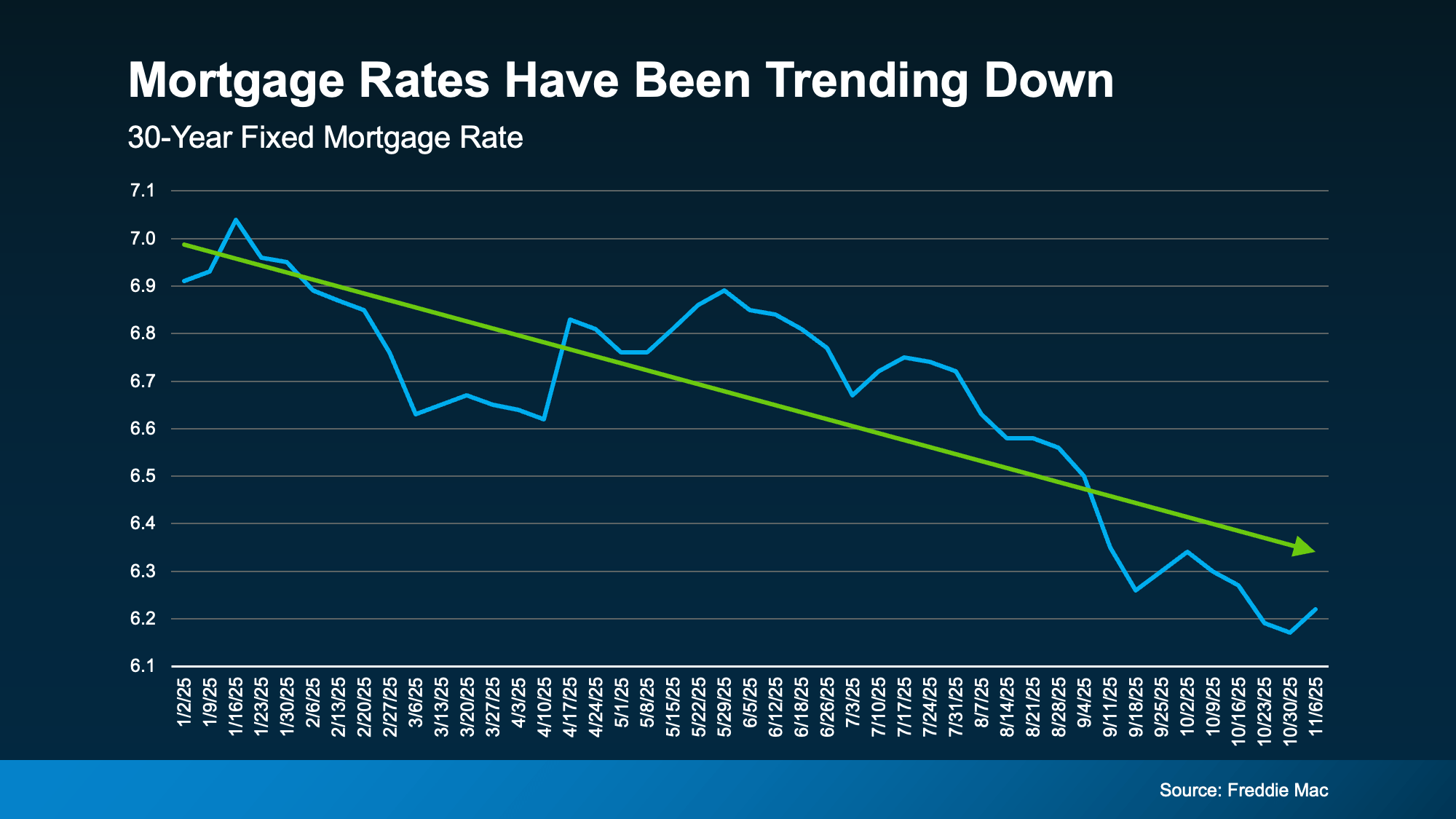
There’s one ray of good news for sellers. Mortgage rates have been trending down since January’s peak of 7.26% and are averaging 6.78% as of this writing per Mortgage News Daily. In the face of perceived chaos and uncertainty over the economy, potential tariffs, and federal government downsizing, the stock market declined as investors moved their money over to more stable investments, including bonds. This pushed down rates on the 10-year treasury, which is closely tied to 30-year mortgage rates. If mortgage rates continue to decline past 6.5%, the market will improve for sellers.  Cromford Report

My Monthly Market Summary March 6, 2025

Market Summary for the Beginning of March 2025

Here are the basics – the ARMLS numbers for March 1, 2025 compared with March 1, 2024 for all areas & types:
  • Active Listings: 23,934 versus 16,568 last year – up 44% – and up 6.7% from 22,432 last month
  • Under Contract Listings: 8,471 versus 8,693 last year – down 2.6% – but up 14% from 7,403 last month
  • Monthly Sales: 5,745 versus 5,757 last year – down 0.2% – but up 21% from 4,733 last month
  • Monthly Average Sales Price per Sq. Ft.: $312.54 versus $292.55 last year – up 6.8% – but down 0.3% from $313.55 last month
  • Monthly Median Sales Price: $459,000 versus $430,000 last year – up 6.7% – and up 1.28% from $453,500 last month
There were 20 working days in February 2025 and 21 in February 2024, so we should allow for the fact that there was 4.8% less time for title companies to close transactions in 2025. In this light, the sales numbers in 2025 look more positive.
The active listing counts continue to rise but at least they did not rise quite as fast as in January. Interest rates have eased to around 6.75% for the 30 year fixed, and demand has started to improve. The problem for sellers is that supply is growing faster than demand so getting a successful sale gets a little harder each day. Conversely for buyers, their negotiation leverage gets a little better each day.
None of this applies to the very top end of the market which is running under new rules. There is strong demand for ultra-luxury homes from wealthy buyers who pay scant attention to interest rates. The activity at this level is skewing the average price per sq. ft. which would be much lower if sales over $3 million are excluded. There were 73 closed sales over $3 million, just over 1% of all transactions, but excluding them drops the average $/SF by 7% to $291 from $313. Those 73 sales over $3 million closed at an average of $882 per sq. ft.
Pricing is under downward pressure in areas with a large excess of supply, such as Maricopa, Buckeye and other outlying areas with plenty of new builds for re-sale homes to compete with. But in much of the market pricing is holding strong. Even in a balanced market we would expect home prices to rise with inflation. We anticipate inflation to increase in 2025 from the more moderate pace of 2024.   Source Cromford Report 
There are currently 44% more single-family detached listings available for sale across Greater Phoenix than one year ago; however, this figure applies to all price ranges. When examining individual price ranges, we observe the following:
   Under $350,000, we have 70% more.
   Between $350,000 and $600,000, we have 51% more.
   Between $600,000 and 1 million, we have 38% more.
   Between 1 million and 3 million, we have 20% more.
   Between 3 million and 7.5 million, we have 21% more.
   Over 7.5 million, we have 4% less than a year ago.
As you can see, inventory has increased at $600,000 and down; most areas are currently experiencing a buyer’s or balanced market. However, Cave Creek and Goodyear are leaning toward a seller’s market, although this situation can change.  As mentioned earlier, the luxury market is in a different class.  Will our busy spring season shift other areas towards a seller’s market?  Right now, supply is higher than demand, and this needs to change.  Lower mortgage rates will help improve the situation, as mortgage applications have surged in recent weeks due to a decrease of about 0.5% in rates.
Sellers are currently negotiating and, on average, are offering concessions.  It’s essential to market your home effectively by ensuring it is move-in ready and presents well. This is not the time to overprice your home, as buyers have many more options available to them.
I can assist you in selling your home, using my proven marketing strategy and resources to prepare your home for the market and ensure it sells for top dollar.
Call me to discuss your situation if you’re considering selling or buying
Uncategorized February 26, 2025

Is an Accessory Dwelling Unit Right for You? Here’s What To Know

Are you having a hard time finding the right home in your budget? Or maybe you already own a home but could use some extra income or a designated space for aging loved ones. Either way, accessory dwelling units (ADUs) could be the smart solution you’ve been looking for in today’s market.

What Is an ADU?

According to Fannie Mae, an ADU is a small, separate living space that’s on the same lot as a single-family home. It must include its own areas for living, sleeping, cooking, and bathrooms independent of the main house. And they can take shape in a few different ways. Fannie Mae adds, an ADU can be:

  • Within a main home, such as a basement apartment
  • Attached to a main home, such as a living area over a garage
  • Detached from the home entirely; it could even be a manufactured home

The Benefits of ADUs

ADUs are growing in popularity as more people discover why they’re so practical. In fact, a recent survey shows that 24% of agents say an ADU, such as a mother-in-law house, is one of the most desired features buyers are looking for right now.

a blue and grey pie chartThe growing appeal makes sense. With rising costs all around you, an ADU can help supplement your income and ease some of the strain on your wallet. Whether you buy a home that has one already or you add one on, it gives you the option to rent out that portion of your home to help pay your mortgage.

Here are some of the other top benefits of ADUs, according to Freddie Mac and the AARP:

  • Living Close, But Still Separate: You get the best of both worlds — more quality time together, plus privacy when you want it. If that sounds like a win, it might be worth looking for a home with an ADU or adding one to your home.
  • Aging in Place: Similarly, ADUs allow older people to be close to loved ones who can help them if they need it as they age. It’s a sweet spot that offers independence and support from loved ones. For example, if your parents are getting older and you want them nearby, this could be a great option for you.
  • Built-In Childcare: If your family’s living in the ADU, you may be able to use them for childcare, which can also be a big cost savings. Plus, it gives your kids more time with their grandparents.

It’s worth noting that since an ADU exists on a single-family lot as a secondary dwelling, it typically can’t be sold separately from the primary residence. And while that’s changing in some states, regulations vary by location. So, connect with a local real estate expert for the most up-to-date guidance.

Bottom Line

In today’s market, buying a home with an ADU or adding one to your current house could be worth considering. Just be sure to talk with a real estate agent who can explain local codes and regulations for this type of housing and what’s available in your area.

What’s your motivation for exploring ADUs?

Buying February 26, 2025

How To Buy a Home Without Waiting for Lower Rates 2025 Feb

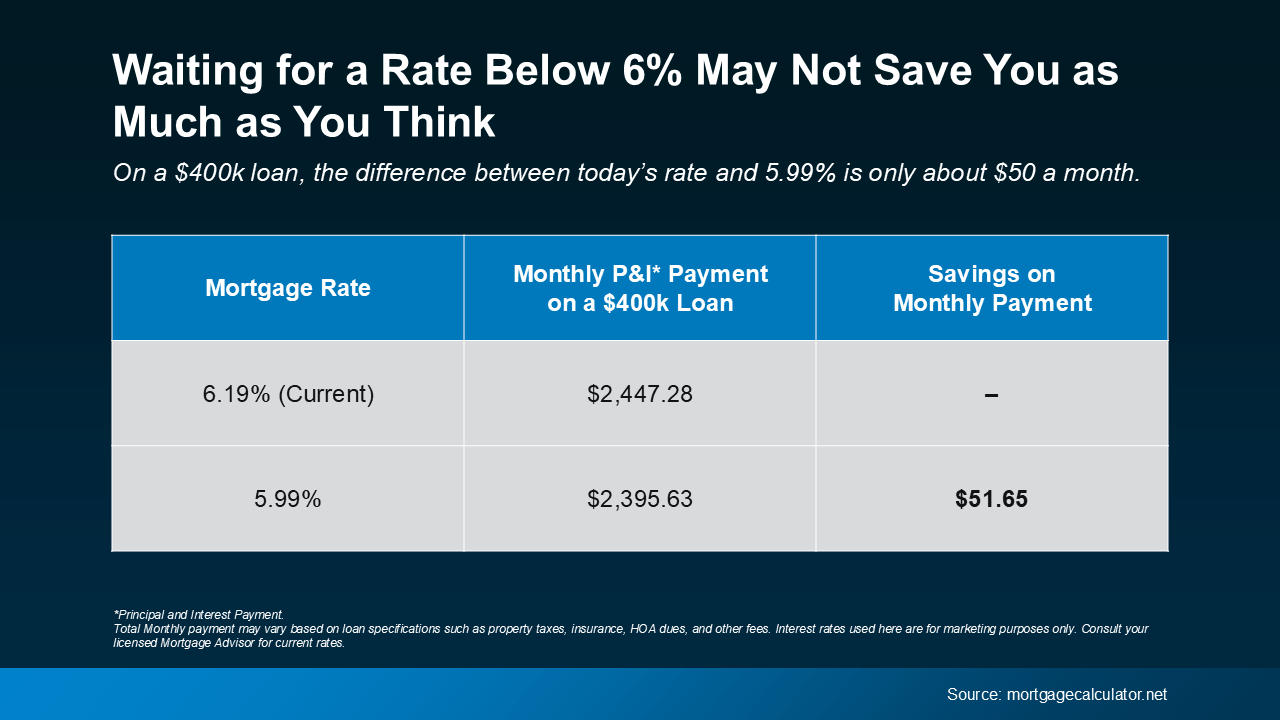
Many people are hoping mortgage rates will come down before they buy a home. But will that actually happen? According to the latest forecasts, experts say rates will decline, but not by as much as a lot of people want.

The good news? Even if they don’t drop substantially, there are still ways to make buying a home more affordable.

How Much Will Rates Drop?

A few months ago, experts were forecasting mortgage rates could dip below 6% by the end of the year. But recent projections suggest that may not happen after all.

While mortgage rates are still expected to decline some later this year, projections from Fannie Mae, the Mortgage Bankers Association (MBA), and Wells Fargo now show them stabilizing closer to 6.5% by the end of the year (see below):

a blue and white graph with numbers and textThat means if you’re holding off on buying a home in hopes of much lower mortgage rates, you may be waiting a while. And if you need to move because something in your life has changed, like a new job, a new baby, or a marriage – waiting that long may not be an option.

Creative Financing Options in Today’s Market

Since rates aren’t expected to decline as much as originally expected, it may be worth considering alternative financing options that could help you get into a home sooner rather than later. Here are three strategies to discuss with your lender to see if any of these make sense for you:

1. Mortgage Buydowns

A mortgage buydown allows you to pay an upfront fee to lower your mortgage rate for a set period of time. This can be especially helpful if you want or need a lower monthly payment early on. In fact, 27% of agents say first-time homebuyers are increasingly requesting buydowns from sellers in order to buy a home right now.

2. Adjustable-Rate Mortgages

Adjustable-rate mortgages (ARMs) typically start with a lower mortgage rate than a traditional 30-year fixed mortgage. This makes them an attractive option, especially if you expect rates to drop in the coming years or plan to refinance later.

And if you remember the housing crash, know that today’s ARMs aren’t like the risky ones back then. Lance Lambert, Co-Founder of ResiClub, helps drive this point home by saying:

. . . ARM products today are different from many of the products issued in the mid-2000s. Before 2008, lenders often approved ARMs based on borrowers ability to pay the initial lower interest rates. And sometimes they didn’t even check that (remember Ninja loans). Today, adjustable-rate borrowers qualify based on their ability to cover a higher monthly payment, not just the initial lower payment.”

In simple terms, banks used to give loans without checking to see if buyers could afford them. Now, lenders verify income, assets, and jobs, reducing the risks associated with ARMs compared to the past.

3. Assumable Mortgages

An assumable mortgage allows you to take over the seller’s existing loan — including its lower mortgage rate. And with more than 11 million homes qualifying for this option according to U.S. News, it’s worth exploring if you want or need a better rate.

Bottom Line

Waiting for a big decline in mortgage rates may not be the best strategy. Instead, options like buydowns, ARMs, or assumable mortgages could make homeownership more affordable right now. Connect with a local lender to explore what works for you.

How does this impact your homebuying plans this year?

Selling February 18, 2025

Are You Asking Yourself These Questions About Selling Your House?

Some homeowners hesitate to sell because they’ve got unanswered questions that hold them back. But a lot of times their concerns are based on misconceptions, not facts. And if they’d just talk to an agent about it, they’d see these doubts aren’t necessarily a hurdle at all.

If uncertainty is keeping you from making a move, it’s time to get the real answers. The ones you deserve. And to take the pressure off, you don’t have to ask the questions, because here’s the data that answers them.

1. Is It Even a Good Idea To Move Right Now? 

If you own a home already, you may be tempted to wait because you don’t want to sell and take on a higher mortgage rate on your next house. But your move may be a lot more feasible than you think, and that’s because of how much your house has likely grown in value.

Think about it. Do you know anyone in your neighborhood who’s sold their house recently? If so, did you hear what it sold for? With how much home values have gone up in recent years, the number may surprise you. According to Lawrence Yun, Chief Economist at the National Association of Realtors (NAR), the typical homeowner has gained $147,000 in housing wealth in the last five years alone.

That’s significant – and when you sell, that can give you what you need to fund your next move.

2. Will I Be Able To Find a Home I Like? 

If this is on your mind, it’s probably because you remember just how hard it was to find a home over the past few years. But in today’s market, it isn’t as challenging.

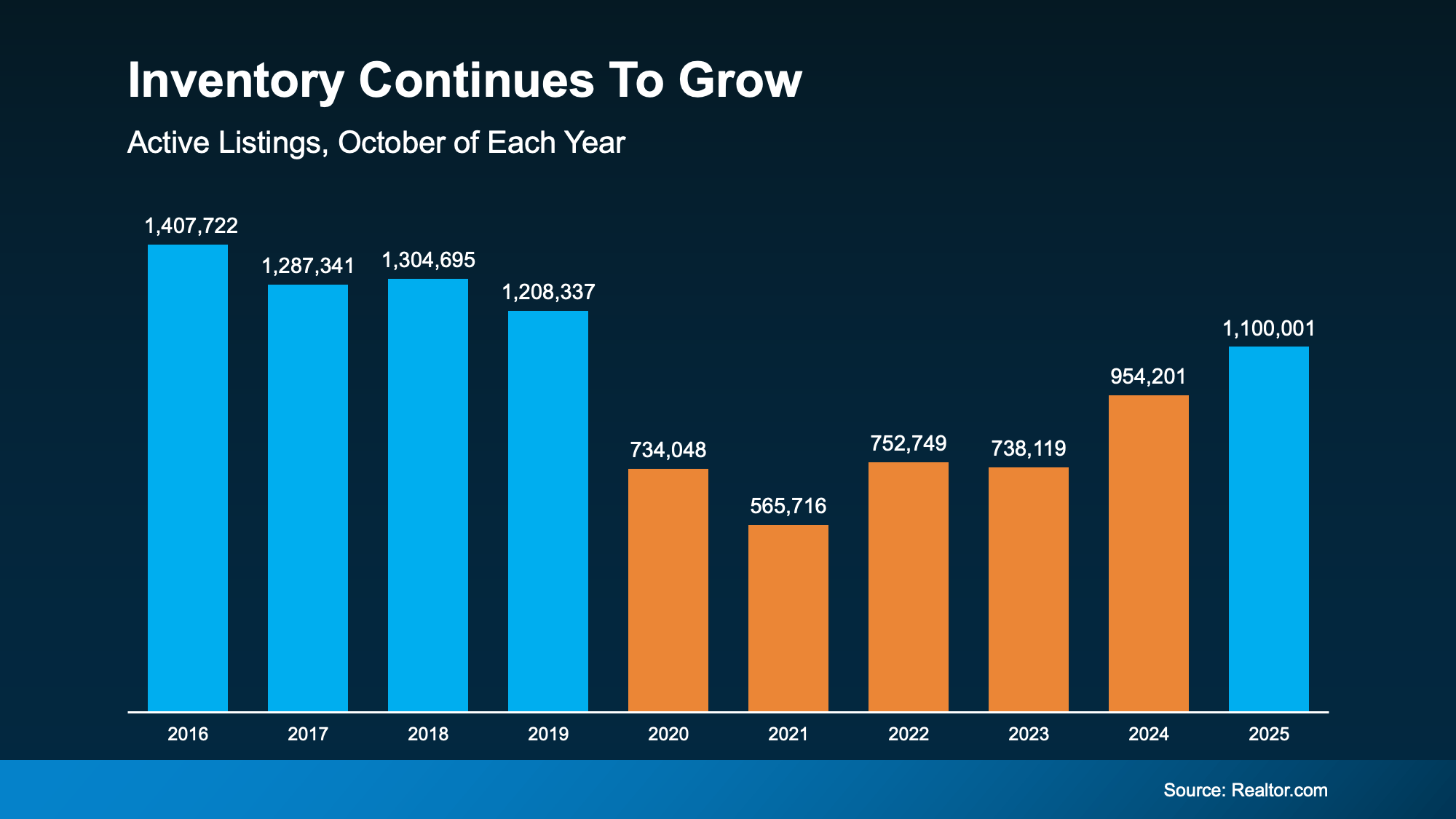
Data from Realtor.com shows how much inventory has increased – it’s up nearly 25% compared to this time last year (see graph below):

a graph of a sales reportEven though inventory is still below more normal pre-pandemic levels, it’s improved a lot in the past year. And the best part is, experts say it’ll grow another 10 to 15% this year. That means you have more options for your move – and the best chance in years to find a home you love.

3. Are Buyers Still Buying?

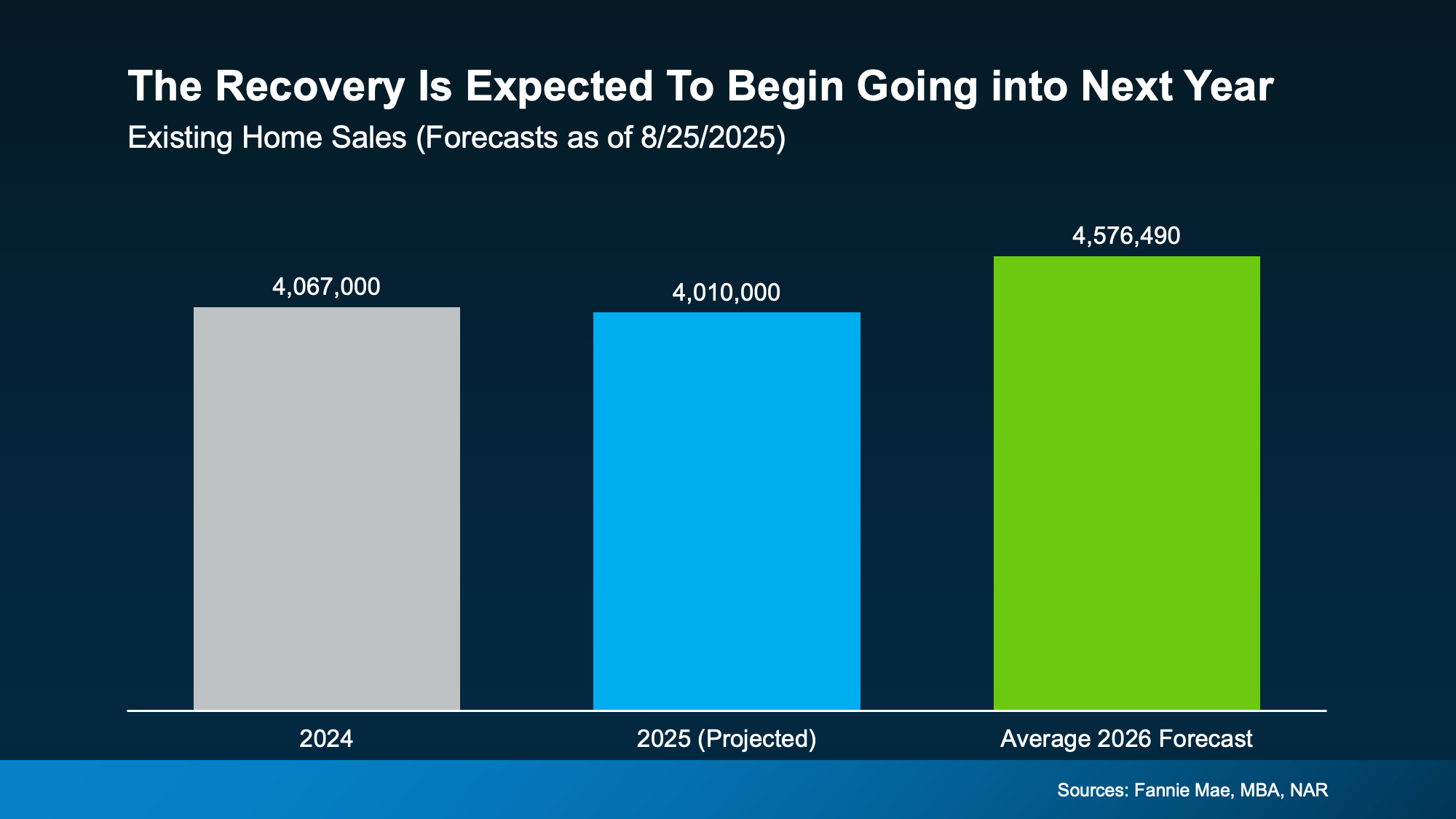
And last, if you’re worried no one’s buying with rates and prices where they are right now, here’s some perspective that can help. While there weren’t as many home sales last year as there’d be in a normal market, roughly 4.24 million homes still sold (not including new construction), according to the National Association of Realtors (NAR). And the expectation is that number will rise in 2025. But even if we only match how many homes sold last year, here’s what that looks like.

  • 4.24 million homes ÷ 365 days in a year = 11,616 homes sell each day
  • 11,616 homes ÷ 24 hours in a day = 484 homes sell per hour
  • 484 homes ÷ 60 minutes = 8 homes sell every minute

Think about that. Just in the time it took you to read this, 8 homes sold. Let this reassure you – the market isn’t at a standstill. Every day, thousands of people buy, and they’re looking for homes like yours.

Bottom Line

When you’re ready to walk through what’s on your mind, I have the answers you need. And in the meantime, tell me: what’s holding you back from making your move?

Markets February 18, 2025

Feb mid-month market update 2-2025

Fact Check February – Don’t Fall In Love With These 7 Narratives on Housing


There is no online shortage of armchair quarterbacks when it comes to prognostications on the future of home values and affordability. However, there are narratives that some people, and journalists, stubbornly hold to that are simply outdated or incorrect. Many of them were true a few years ago but are no longer true today. Here are just a few:


Myth #1 – Buyer demand is declining. This was true in 2022 and 2023 but is no longer true today. While mortgage rates have knocked many buyers out of the game, buyer demand is now stable and following last year’s trend with little reaction to rate fluctuations.


Myth #2 – There is very little to buy under $300K. This was definitely true a few years ago, but not today. In February 2022, there were only 90 single family listings active for sale under $300,000 in Maricopa and Pinal County. Today, there are 534, mostly in Pinal County. Condo and townhome inventory is even more abundant by comparison. In March 2022, there were only 156 active condo/townhome listings while today there are more than 1,200, all of which are in Maricopa County.


Myth #3 – My income is too high to qualify for any homebuyer assistance programs. Some grant and downpayment assistance programs correlate to an area, not income. Many have income limits as high as $150,000/year and some don’t have income limits at all. Putting in the research and finding a qualified loan officer to explain these programs could save thousands of dollars.


Myth #4 – I need to be a first-time homebuyer or renter to qualify for homebuyer assistance programs. In most cases, this is not true. They may say first-time home buyer, but if you haven’t owned a home in 3 years or more, you’re a first-time home buyer once again according to HUD’s definition. Also, if you’ve only ever owned a home with a spouse, have a child, and are now divorced, you are also a first-time home buyer. Or, if you’ve only ever owned a mobile home. These are just 3 of the 5 HUD definitions for first-time homebuyer.


Myth #5 – Mortgage rates are too high, there’s nothing to be done about it.
57% of January sales between $200,000-$600,000 involved seller-paid incentives, most went towards a temporary buydown of the mortgage rate, and many home builders are providing permanent rate buydowns. Other sellers have FHA or VA loans that are assumable with rates below 5%. In fact, about 10% of all active listings fit this criteria. Some buyer assistance programs even allow grant money to buy down mortgage rates. Again, a little research goes a long way in hacking the affordability issues caused by mortgage rates.


Myth #6 – Housing is in a bubble and home prices are on the precipice of a crash. One could argue that Greater Phoenix already had a bubble and price crash in 2022 when prices rose to their peak by May and declined a whopping 12.3% from May to December that year, with short-term flip investors taking the brunt of the pain. Since then, prices bounced and stabilized with most price ranges seeing less than 2% appreciation year over year today. That is less than the current rate of inflation, and what is expected after nearly a year in a buyer-leaning market. While Greater Phoenix is officially in a buyer’s market, it’s very mild. Under these conditions, sale price measures are showing most non-luxury buyer negotiations at approximately 1.9% below the last list price. That’s a huge improvement over 2022 where sales prices were averaging 2.4% OVER list price. Prices are declining in some areas, but not all, and not by leaps and bounds. Current supply and demand indexes do not support massive declines in sales prices, but shaving 1-2% off lower list prices during negotiations is not out of the question. Sellers are not pushing the market with outrageous list prices. In fact, most are in line or even below last year in some price ranges.


Myth #7 – I’ll sell my home “as-is” and price it aggressively with buyer incentives. This worked in the mild seller’s market of 2023 and first part of 2024, but not now. In a buyer’s market, it’s okay to sell your home “as-is” so long as it “is” in excellent condition. The hierarchy of importance isn’t price first, then buyer incentives, then condition. It’s condition AND price, the importance of additional incentives depends on your area and price range. When everyone is offering low prices and buyer incentives, properties in good condition rise to the top.


Commentary by Tina Tamboer, Senior Housing Analyst with The Cromford Report.

Selling February 11, 2025

A Record Percent of Buyers Are Planning To Move in 2025

This could be the year to sell your house – and here’s why. According to a recent NerdWallet survey, 15% of people are planning to buy a home this year. That’s actually a record high for this survey (see graph below):

a graph of blue rectangles with white textHere’s why this is such a big deal. The percentage has been hovering between 9-11% since 2020. This recent increase shows buyer demand hasn’t disappeared – if anything, it indicates there’s pent-up demand ready to come back to the market.

That doesn’t mean the floodgates are opening and that there’s going to be a huge wave of buyers like we saw a few years ago. But this does signal there’ll be more activity this year than last.

At least some of the buyers who put their plans on hold over the past few years will jump back in. Whether they’re feeling more confident about moving, they’ve finally saved up enough to buy, or they simply can’t wait any longer – this is the year they’re aiming to take the plunge.

And, according to that same NerdWallet survey, more than half (54%) of those potential buyers have already started looking at homes online.

That’s a good indicator that a number of these buyers will be looking during the peak homebuying season this spring. So, if you find the right agent to make sure your house is prepped, priced, and marketed well, you can get your house in front of them.

Bottom Line

More people are going to move this year, and with the right strategy, you can make sure your house is one of the first they look at.

What do you think these buyers will love most about your house?

Let’s talk it over and make sure it’s front and center in your listing.

My Monthly Market Summary February 8, 2025

Market Summary for the Beginning of February 2025

Market Summary for the Beginning of February
Hello…
Here are the basics – the ARMLS numbers for February 1, 2025 compared with February 1, 2024 for all areas & types:
  • Active Listings: 22,432 versus 15,574 last year – up 44% – and up 12.1% from 20,007 last month
  • Under Contract Listings: 7,403 versus 7,423 last year – down 0.3% – but up 35% from 5,496 last month
  • Monthly Sales: 4,677 versus 4,435 last year – up 5.5% – but down 16.3% from 5,585 last month
  • Monthly Average Sales Price per Sq. Ft.: $314.24 versus $288.70 last year – up 8.8% – and up 3.6% from $303.43 last month (see below)
  • Monthly Median Sales Price: $453,500 versus $430,000 last year – up 5.5% – and up 0.8% from $450,000 last month
There were 21 working days in both January 2025 and January 2024, so we do not need to make adjustments based on working days.
There is significant bad news for sellers in the active listing counts. An increase of over 12% is the last thing they need, as the limited pool of buyers has plenty of choice already. Last year we saw an increase of only 7%. The good news is that closings were up 5.5% compared to a year ago and under contract listings are down only 0.3%. However sellers would have liked to see stronger growth in listings under contract. They were up 45% over the month of January in 2024 and up only 35% in 2025.
In contrast the news on pricing is deceptively good. The average price per sq. ft. has risen a colossal 8.4% over the past 2 months and 8.8% over the past year. Almost all the annual increase has happened in the last 2 months. This news is accurate mathematically, but needs to be treated with extreme caution. The top end of the market has been on fire over the last 2 months with closed sales up dramatically compared with a year earlier. The higher up the price range you go, the more startling the increase in sales volumes.
We have seen 142 closings of $3 million or more in the last 2 months with an average price of $864 per sq. ft.
In the same period a year ago we saw only 92 closings of $3 million or more with an average price of $801 per sq. ft.
We have seen 35 closings of $6 million or more in the last 2 months with an average price of $1,047 per sq. ft.
In the same period a year ago we saw only 9 closings of $6 million or more with an average price of $1,074 per sq. ft.
Note that
  1. The average price per sq. ft. for these high-end homes is far above those of the rest of the market
  2. The number of closings over $6 million is up by an astonishing 289%.
This small number of closings has an out-sized effect on the overall average price for the market as well as the average price per square foot. It has only a tiny effect on the median sales price. In these circumstances the median sales price is a much more accurate indicator of price movements for the bulk of the market. The monthly median sales price has barely moved over the last 3 months. Although it bumped up to $453,500 on Feb 1, it is back down to $450,000 again today.
Although interest rates are off their heights, the key 30-year fixed rate is still a little over 7% and the Federal Reserve has little appetite for further cuts. At this stage, there seems to be more chance that buyers will have to get used to these rates than there is of rates coming down significantly. We therefore expect demand to stay subdued and supply to continue to rise, though perhaps not as strongly as it did in January.
It is good to see the contract ratio move from the 20s into the 30s, with a reading of 33 at the start of February. However this is still very weak compared with the 47.7 we measured on February 1, 2024. The Cromford®Market Index is in a slow falling pattern which is likely to persist during February. There is nothing obvious in the near term to disturb that trend. There is a wide difference in market balance between the cheaper and more far-flung areas of the valley and the more expensive areas closer to Phoenix itself. Meanwhile, the high-end market will continue to be a law unto itself, but it has almost no impact on the market below $1 million. There is no trickle-down effect here. High-end buyers pay little attention to mortgage rates and are influenced more heavily by how their stocks and other investments are performing. If the stock market and/or crypto markets were to cool, then this may take some wind out of the sails for the housing market over $3 million. If they don’t cool then the top-end housing market probably won’t slow down either. We should remember that expensive homes have much more tangible value than many investments that exist only in the digital world, but they are not totally immune to volatility. Cromford Report
For the latest information, please visit my website. You’ll find a daily blog, monthly reports, and seller and buyer guides. Don’t forget to sign up for Neighborhood News, the best way to stay connected with what’s happening in the real estate market in your area. You can view homes that are currently for sale and those that have recently sold. Discover whether home sales in your neighborhood are trending upwards or downwards, and check current selling prices for homes nearby. You can also search real-time listings in any market area using the “SEARCH FOR HOMES” feature.
Feel free to call me for a free buyer or seller consultation.
The 3 Biggest Mistakes Sellers Are Making Right Now
If you want to sell your house, having the right strategies and expectations is key.
Buying February 3, 2025

3 Reasons To Buy a Home Before Spring

3 Reasons To Buy a Home Before Spring

Let’s face it — buying a home can feel like a challenge with today’s mortgage rates. You might even be thinking, “Should I just wait until spring when more homes hit the market and rates might be lower?”

But here’s the thing, no one knows for sure where mortgage rates will go from here, and waiting could mean facing more competition, higher prices, and a lot more stress.

What if buying now — before the spring rush — might actually give you the upper hand? Here are three reasons why that just might be the case.

1. Less Competition from Other Buyers

The winter months tend to be quieter in the real estate market. Fewer people are actively looking for homes, which means you’ll likely face less competition when you make an offer. This makes the process feel less rushed and less stressful.

According to the National Association of Realtors (NAR), homes sit on the market longer in winter compared to spring and summer (see graph below):

a graph of blue and green barsFewer buyers in the market means you’ll likely have more time to make thoughtful decisions. It also means you may have more negotiating power. According to the Alabama Association of Realtors:

A significant benefit of buying a home in winter is the reduced competition. Because of the perceived benefits of spring, many buyers delay the start of their house hunt. As a result, you will find fewer people competing for the same properties during winter. Less demand can translate into more negotiating power as sellers may be more willing to entertain offers or agree to concessions to get a deal closed quickly.”

2. More Negotiating Power

With homes staying on the market longer, sellers may be more willing to negotiate. This can lead to better deals for you as a buyer, whether that means a lower price or added incentives, like sellers covering closing costs or making repairs. As Chen Zhao, an Economist at Redfinpoints out:

“. . . buying during the off season means less competition from other buyers. That means potentially negotiating a better deal.

Plus, when demand is lower, sellers often feel more pressure to work with serious buyers. This could give you an edge to negotiate terms that work best for your situation.

3. Lock in Today’s Prices Before They Rise

Historically, home prices tend to be at their lowest point in the winter months, too. According to data from NAR, home prices last year were at their lowest in January, February, and March — right before the spring buying season kicked in (see graph below):

a graph of prices and numbersThis trend isn’t new — Bright MLS shows between 2010 and 2024, home prices in January and February were, on average, 15% lower than during the month of peak home prices (typically June). Buying in the off-season means you’re more likely to avoid paying the premium prices that come with the high demand of spring.

On top of that, home prices generally appreciate over time, meaning they tend to go up year after year. That means if you’re ready to buy and you can make it happen, you’re not only taking advantage of what might be the lowest prices of the year, but you’re also locking in today’s price before it increases in the future.

Bottom Line

While spring may seem like the obvious time to buy, moving before the peak season can give you significant advantages, like less competition, more negotiation power, and lower prices.

If you’re ready to explore your options, let’s connect.

Buying February 3, 2025

Two Resources That Can Help You Buy a Home Right Now

Two Resources That Can Help You Buy a Home Right Now

A recent report from Realtor.com says 20% of Americans don’t think homeownership is achievable. Maybe you feel the same way. With inflation driving up day-to-day expenses, saving enough to buy your first home is more of a challenge. But here’s the thing. With the right resources and help, you can still make it happen.

There are options that can help make buying a home possible today — even if your savings are limited or your credit isn’t perfect. Let’s explore just two of the solutions that could help get you into your first home no matter the market.

1. FHA Loans

If your down payment savings and your credit score aren’t where you want them to be, an FHA loan could be your pathway to buying a home. According to the U.S. Department of Housing and Urban Development (HUD) and Bankrate, the big perks of an FHA home loan are:

  • Lower Down Payments: They typically require a smaller down payment than conventional loans, sometimes as low as 3.5% of the home’s purchase price.
  • Lower Credit Score Requirements: They’re designed to help buyers with credit scores that might not qualify for conventional financing. This means, when conventional loans aren’t an option, you may still be able to get an FHA loan.

The first step is to connect with a lender who can help you explore your options and determine if you qualify.

2. Homeownership Assistance Programs

And if you need a more budget-friendly down payment, that’s not your only option. Did you know there are over 2,000 homeownership assistance programs available across the U.S. according to Down Payment Resource? And more than 75% of these programs are designed to help buyers with their down payment. Here’s a bit more information about why these could be such powerful tools for you:

  • Financial Support: The average benefit for buyers who qualify for down payment assistance is $17,000. And that’s not a small number.
  • Stackable Benefits: To make it even better, in some cases, you may be able to qualify for multiple programs at once, giving your down payment an even bigger boost.

Rob Chrane, CEO of Down Payment Resource confirms a little-known fact:

“Some of these programs can be layered. And so, in other words, you may not be limited to just one program.

If you want to learn more or see what you qualify for, be sure to lean on the pros. A trusted real estate agent and a lender can guide you through the process, explain the help that’s out there, and connect you with resources to make buying a home a reality.

Bottom Line

If you’re ready to stop wondering if buying a home is possible and start exploring solutions, let’s connect.