BuyingMarketsMy Monthly Market SummarySelling December 19, 2025

My last Mid-Market update for 2025 from Shawn

As the year comes to a close, I want to extend my deepest gratitude to every client I’ve had the privilege to serve— past present, and future. Your trust in me is the greatest gift. Merry Christmas and Happy New Year!  May your home be filled with love, laughter, and unforgettable moments this holiday season.

Optimism Emerges for 2026 Home Sales

Incomes Up 33% in Maricopa County since 2020

For Buyers

Journalists reporting on housing affordability are frequently quoting sources that reference median household income. Household income can be broken down into two categories, family and non-family households. The US Census defines a family household as two or more people living in a home and related by blood or marriage. Non-family households are all others, including non-related people living as roommates or people living alone. Non-family household income is typically much lower than family income and is more suited for measuring the affordability of rental housing. Family household income is more suited for measuring the affordability of purchasing a home.

From 2020-2024, the median annual household income in Maricopa County rose 33% from $68K to $91K. The non-family median household income rose from $44.5K to $59K. Family income rose from $80K to $108K; and married family income, a subset of family income, rose from $95K to $126K.

The lending industry considers 28% of gross income an affordable monthly payment for mortgage or rent. For a family household that’s roughly a $2,500-$3,000 payment. At a mortgage rate holding steady around 6.25%, that payment supports homes priced between $350,000 and $500,000 in Maricopa County. That budget will support roughly a 1,500-1,800 square foot single family home, which will trend in the mid-$300s in the West Valley, and the mid-$400s in the Southeast Valley.

Incomes are not stagnant in Maricopa County and have been rising at a significant pace since 2020. It’s home values that have been stagnant for 3 years waiting for family incomes to catch up and mortgage rates to decline. Inventory under $500K accounts for roughly 57% of all inventory for sale and is up 16% from last year. With rates holding steady in the low 6% range for the last 4 months, demand and optimism is up for the onset of 2026.

For Sellers

November closings were another success for Q4 2025, up 3.3% from last November, except it was actually better than that. Last November had 19 closing days compared this November with 18 closing days, meaning this year November closed an extra 23 sales per day, putting the improvement at 9% instead of 3%. So far December is also outpacing last year with an extra 14 closings per day on average. If this is a peek into what 2026 may bring, then sellers should be optimistic for contract activity in January.

The big question is how many listings will line up to meet January’s expectation of increased demand. January is typically the top month for luxury, retirement and seasonal community listings to hit the market. However, new listings across all price points and areas often see a peak in March, providing ample selection for Spring buyers. This front-loading of inventory in the first part of the year often results in a rising number of price reductions as well, the level of which depends on whether we enter the year in a buyer’s market, balanced, or seller’s market.

Recent improvements in demand combined with declines in supply are pushing the  Market Index back in the direction towards a balanced state. While Greater Phoenix is still in a buyer’s market overall, central and established cities are becoming the first to move back into seller’s markets. Most recently, Phoenix, Mesa and Tempe shifted back into seller’s markets within the last 30 days, putting nearly all cities in the Northeast and Southeast Valley in seller’s markets, with the exception of buyer’s markets Queen Creek and Sun Lakes. Developing cities on the edges of Metro Phoenix are typically the last ones to pull out of a buyer’s market. Pinal County cities, for example, are buyer’s markets except for Apache Junction, which is a seller’s market. The West Valley is a mix as El Mirage is a small seller’s market and Peoria recently shifted into a balanced market, joining Glendale, Avondale and Laveen. All other West Valley cities are buyer’s markets.

Don’t expect much upward pressure on price in the short term, even if your city has shifted back into a seller’s market. Prices can take up to 6 months to show a response to a shift, which means the seller’s market must be maintained, and many of these cities are still quite weak. What sellers can expect is more showing activity, shorter days on market, and less pressure to reduce their price once the Spring buying season begins.

Commentary written by Tina Tamboer, Senior Housing Analyst with The Cromford Report

Considering Buying or Selling? Let’s Connect.

With over 21 years of experience in the real estate market, I’m here to help you navigate your next move with confidence. Whether you’re looking to buy, sell, or simply explore your options, I’ll provide you with the insights you need to make informed decisions.

Even if you’re not planning to sell for several months, it’s never too early to start preparing. I offer personalized consultations where we can walk through your property together to identify improvements that can maximize your home’s value and sell for top $$.  

Curious About Your Home’s Value?

Click the Home Valuation link in my signature below for a comprehensive assessment.

Let’s chat soon to start planning your next move.

Merry Christmas, wishing you and your family a healthy, happy, prosperous New Year!

SHAWN KEANE

REALTOR, ARIZONA
(602) 989-3209 Cell

shawn.keane@azmoves.com

Visit My Website | Home Valuation | Read My Reviews

MarketsMy Monthly Market Summary December 9, 2025

Market Summary for the Beginning of December 2025ut first……..

As the year comes to a close, I want to extend my deepest gratitude to every client I’ve had the privilege to serve— past, present, and future. Your trust in me is the greatest gift.  Merry Christmas and Happy New Year!  May your home be filled with love, laughter, and unforgettable moments this holiday season.

Here are the basics – the ARMLS numbers for December 1, 2025 compared with December 1, 2024 for all areas & types:

  • Active Listings: 24,653 versus 21,593 last year – up 14% – but down 5.0% from 25,956 last month
  • Under Contract Listings: 7,191 versus 6,393 last year – up 12% – but down 2.1% from 7,344 last month
  • Monthly Sales: 5,389 versus 5,146 last year – up 4.7% – but down 12.7% from 6,173 last month
  • Monthly Average Sales Price per Sq. Ft.: $294.79 versus $290.09 last year – up 1.6% – and up 0.4% from $293.60 last month
  • Monthly Median Sales Price: $450,000 versus $445,000 last year – up 1.1% – and unchanged from last month

We saw a sharp turnround in supply between October and November thanks to 43% more listing expirations and 20% more cancellations than this time last year. Supply is down 5% in a month which is good news for the remaining sellers. Buyers cannot complain because they still have about 14% more choice than last year.

Mortgage rates are lower than last month and we can report stronger contract activity. The total number of under contract listings is up 12% from this time last year. At first sight sales look low compared with last month but that is because November had 3 fewer working days than October. The comparison with November 2024 is fairer and there we see closings up almost 5% There can be no doubt that demand is on an upward trend at the moment. This is welcome good news for almost everyone after a disappointing Spring and Summer.

When demand is growing and supply is falling, this makes the market more favorable for sellers, trending higher now and will no doubt continue to move in that direction for the rest of the year.

Pricing remains resilient with no signs left of the weakness we saw during the Summer. The average price per square foot is up 1.6% for the last 12 months, which is better than zero but not as high as inflation. Prices are down relative to inflation which when combined with lower interest rates means affordability is improved compared with December 2024. This is because median household earnings continued to increase throughout 2025. Median sales price is also up from a year ago, but about 2% lower when adjusted for inflation.

In summary, the market is looking healthier than we expected 3 months ago. 2025 was a low volume year with only the top end of the market doing well. However Greater Phoenix’s housing market seems determined to show improvement as we approach the end of the year and looks likely to end on a high note.  Source Cromford Report

Wage growth has been outpacing consumer prices for the past three years.  Yet most people are not feeling it and have constantly expressed negative economic sentiments.

The reason is that everything is more expensive by 28.4% from the pre-Covid period. The cumulative wage gains over the same period have been 32.9%. Those exact figures are not computed by a normal person, rather they are seeing than near 30% price gains in their everyday experience.  had inflation not popped in 2022, the cumulative price gain over a comparable period would be about 10%, not really noticeable from a year to year.

As to home prices, it is finally cooling into near zero growth after the supersized gains in the early covid years. The consistent future income gains will make homes more affordable. but the improvements in housing affordability are still marginal because the mortgage rates have a much greater influence on housing affordability. Decline in mortgage rates will therefore be the key to future housing affordability along with adequate housing supply to keep home prices at calm levels.     By Lawrence Yun, Chief Economist and Senior Vice President of Research at the National Association of Realtors.

Considering Buying or Selling? Let’s Connect.

With over 21 years of experience in the real estate market, I’m here to help you navigate your next move with confidence. Whether you’re looking to buy, sell, or simply explore your options, I’ll provide you with the insights you need to make informed decisions.

Even if you’re not planning to sell for several months, it’s never too early to start preparing. I offer personalized consultations where we can walk through your property together to identify improvements that can maximize your home’s value and sell for top $$.  

Curious About Your Home’s Value?

Click the Home Valuation link in my signature below for a comprehensive assessment.

Let’s chat soon to start planning your next move.

SHAWN KEANE
REALTOR, ARIZONA
(602) 989-3209 Cell
shawn.keane@azmoves.com
BuyingMarketsSelling November 23, 2025

Most Experts Are Not Worried About a Recession

Homebuyers are watching the economy closely, and for good reason. Buying a home is one of the biggest purchases most people ever make. And some recession talk in the media has made a lot of would-be buyers second guess their plans.

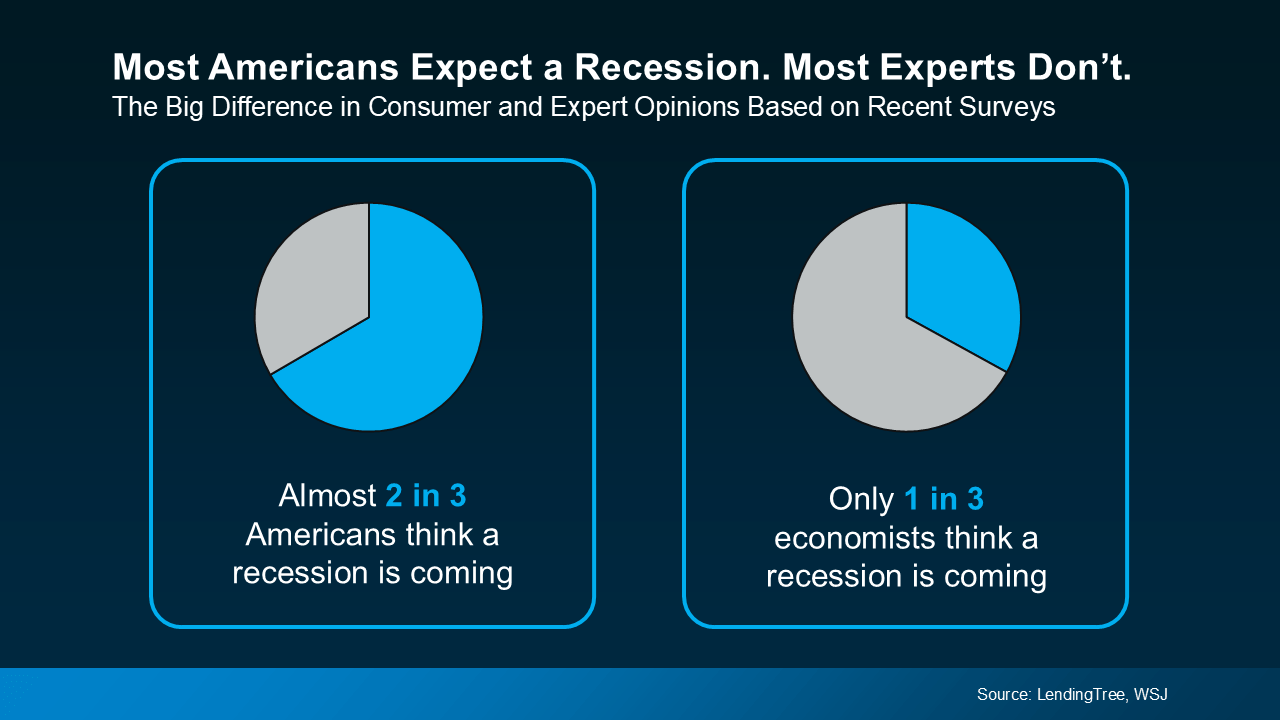
In the latest LendingTree survey, almost 2 in 3 Americans said they think a recession is coming. And 74% of respondents say that’s having an impact on their financial decisions.

But here’s the good news: the experts aren’t nearly as concerned.

Most Americans Expect a Recession, But Most Experts Don’t

According to an October report from the Wall Street Journal (WSJ), only 1 in 3 experts surveyed say we may be headed for a recession sometime in the next 12 months (see graph below):

a blue and grey pie chartIf the expert economists aren’t super worried, should you be? We’re not in a recession right now. And there’s no guarantee we’re heading into one.

What we do have is uncertainty – and the best way to handle that is by leaning on facts, not fear. You can do that by making sure you have the information you need to make an informed decision.

Tips for Buying a Home During Periods of Economic Uncertainty

Here’s the best advice anyone can give right now. While it’s important to keep an eye on what’s happening in the economy, that shouldn’t necessarily overshadow your real-life needs. Economic shifts come and go, but the reasons people buy homes rarely change. Danielle Hale, Chief Economist at Realtor.com, explains:

“Well-prepared buyers who have been waiting on the sidelines are likely motivated by personal and lifestyle needs like growing families, new jobs, or retirement. And these considerations can outweigh short-term economic uncertainties . . . ”

Timing your move around real life (not the news cycle) is what matters most.

But here’s the key. If you’re going to buy a home right now, job stability really matters. You need to feel confident in your income and know you can comfortably manage your mortgage payments, even if your situation or the economy shift.

If your job is secure and you’ve built a cushion of savings, experts say you don’t necessarily need to delay. Just keep these tips from the economists at Redfin in mind:

  • Set a budget and stick to it: Don’t overextend. Make sure your payments are affordable and your savings can cover any surprises. This includes factoring in costs likely to rise, like home insurance and taxes.
  • Negotiate: There are more homes for sale right now, and other buyers may pull back because of their own fears. That gives you more negotiating power when working with sellers. Use it to get the best deal possible.
  • Be strategic about payments and mortgage rates: Talk to lenders about what payment you can afford and the rate you can qualify for today, as well as your options if rates go down later on.
  • Consider selling before you buy: If you already own a home, selling first can reduce the financial pressure and help solidify your budget for your next home.

But nothing replaces the value of having a trusted team around you, especially right now. As Bankrate says:

“Buying a home during a recession can sometimes be a good idea – but only for people who are lucky enough to remain financially stable . . . Be sure to enlist the help of an experienced local real estate agent. Not only do agents know their markets well, they will also work to get you the best deal in any given situation, including a recession.”

Bottom Line

Most Americans think a recession is coming. But most experts don’t.

So, you don’t necessarily have to put your moving plans on hold. If your finances are solid, your job is stable, and you have a real need to move, you can still make it happen.

What’s holding you back from making your next move? Let’s talk it over.

Selling November 23, 2025

The Top 2 Things Homeowners Need To Know Before Selling

Here’s something you should know before you sell your house. The homeowners who win in today’s market aren’t the ones waiting it out or stepping back. They’re the ones who adapt from the start.

A number of homeowners this year didn’t get the outcome they wanted. But it’s not because something’s wrong with the market. It’s because something wasn’t right with their expectations.

Realtor.com reports 57% more homes have been taken off the market compared to last year. That means they listed… but didn’t sell. But here’s the honest truth. It was mostly because of two things: price and timing.

And if the seller had come in with the right mindset on each, their sale would’ve gone differently. Here are the top 2 things you can learn from those other sellers.

1. Price It Right from Day 1

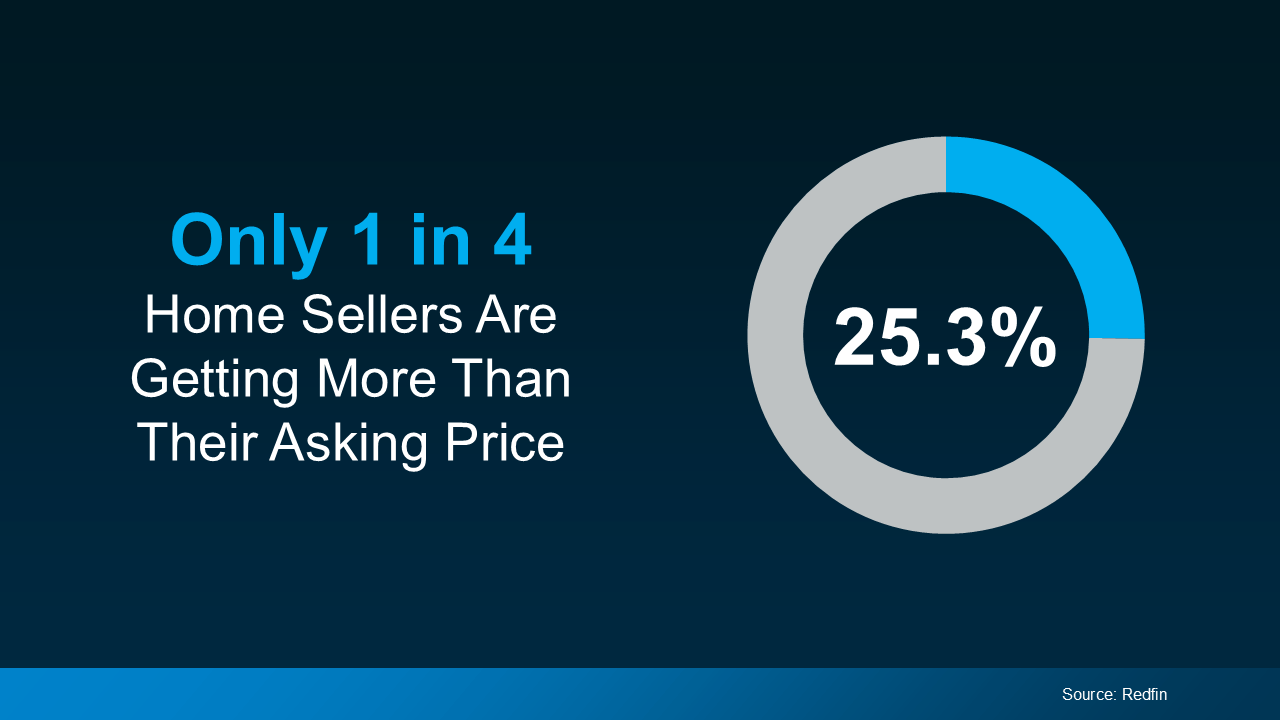
Let’s start with the most common sticking point: the asking price. Today, 8 in 10 sellers expect to get their asking price or more. But that confidence doesn’t always line up with reality.

According to Redfin, only 1 in 4 (25.3%) sellers are actually getting more than their list price.

a blue and grey circle with white textAnd here’s where the mismatch is coming from.

A few years ago, you could set any price and buyers would come running, no matter what the price tag said. Odds are, you’d still sell for over asking. But things are different now.

Buyers have more options than they’ve had in years, so they can afford to be more selective. If your price feels even a little high to them, it’ll get overlooked in a heartbeat.

And for the homeowners who had that happen, some end up pulling their listings instead of making a simple adjustment that could have changed everything. Which is a shame, honestly. Because a small price tweak is usually all it takes to bring buyers in and get the deal done.

According to HousingWire, the average price cut right now is just 4%.

Think about that. Other sellers are listing too high and giving up rather than dropping their price 4%. If they’d just started 4% lower, they may have already sold. So, before you list, talk to your agent about what’s working nearby. They’ll help you find the sweet spot that’s competitive, realistic, and still protecting your bottom line.

And here’s the kicker. If you’ve been in your home for a while, your equity gives you room to set your list price more competitively and still come out way ahead. Unfortunately, those other sellers didn’t seem to realize that.

2. Don’t Rush the Process

Another common misstep: expecting your house to sell in a weekend.

Many sellers right now remember when homes sold in as little as hours – and they expect that to happen today. But in most markets, that’s not the reality anymore.

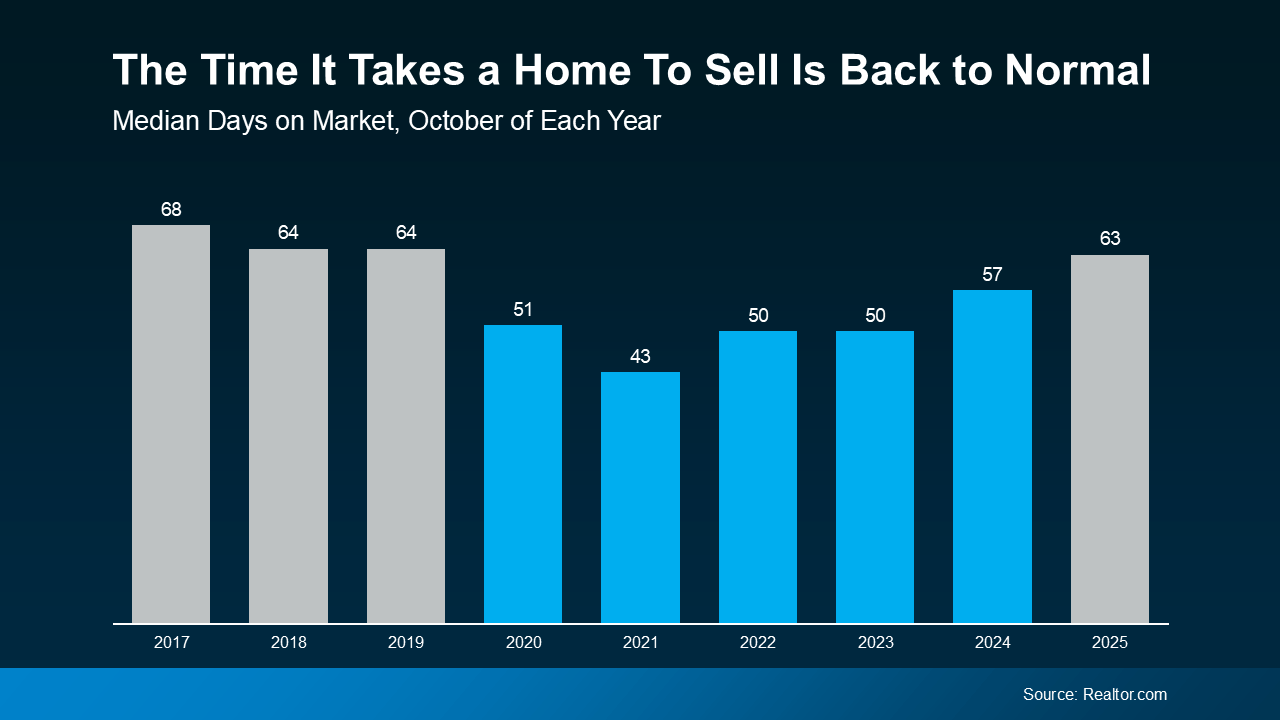
It takes closer to 60 days to go from listed to sold, which is actually normal (see the gray in the graph below):

a graph of blue and grey barsIt just feels slower because they’re comparing it to the lightning-fast pace of 2020 and 2021.

Think of it like driving 65 mph on the highway, then exiting and going 25. It feels like you’re crawling, but it’s actually the right speed for where you are. That’s what other sellers can’t seem to get over. But you can get ahead of that, by knowing what to expect.

Today’s buyers are more intentional. They’re taking their time, weighing their options, and making thoughtful decisions, which is creating a much healthier housing market.

So, if you’re planning to sell, don’t expect it to happen instantly. And don’t assume your house won’t sell if it doesn’t go under contract in the first weekend.

It’s normal for these things to take time.

If you want to make sure your house sells as quickly as possible, talk to your agent about ways to stand out, whether that’s through staging, photography, or strategic pricing. With the right advice, the right price, and the right prep work, it can still sell quickly.

Bottom Line

If you’re thinking about selling, don’t let the market discourage you, let it guide you. The listings that didn’t sell this year weren’t doomed. They just started with the wrong strategy.

You can still win if you price right, are patient, and work with a local agent who knows how to position your home from the start.

Because in today’s market, success isn’t about waiting for conditions to change. It’s about getting your expectations right from day one.

BuyingMarketsMortgage RatesSelling November 23, 2025

The Housing Market Is Turning a Corner Going into 2026

After several years of high mortgage rates and hesitation from buyers, momentum is quietly building beneath the surface of the housing market. Sellers are reappearing. Buyers are re-engaging. And for the first time in what feels like forever, there’s movement happening again.

No, it’s not a surge. But it is a shift – and it’s one that could set the stage for a stronger year in 2026.

So, what’s driving the comeback? Here are three big trends that are slowly breathing life back into the housing market right now.

1. Mortgage Rates Have Been Coming Down

Mortgage rates are always going to have their ups and downs – that’s just how rates work. Especially with the general economic uncertainty right now, some volatility is to be expected. But, if you zoom out, it’s the larger trend that really matters most.

And overall, rates have been trending down for most of this year (see graph below):

a graph with a line and a green lineAnd in just the last few months, we’ve seen the best rates of 2025. According to Sam Khater, Chief Economist at Freddie Mac:

“On a median-priced home, this could allow a homebuyer to save thousands annually compared to earlier this year, showing that affordability is slowly improving.

Here’s why that matters for you. This shift changes what you can actually afford. It means lower borrowing costs and more buying power. Take this as an example.

Data from Redfin shows a buyer with a $3,000 monthly budget can now afford roughly $25,000 more home than they could one year ago. That’s a big deal. And it’s just one of the reasons why activity is picking up.

2. More Homeowners Are Ready To Sell

For a while, many homeowners stayed put because they didn’t want to give up their low mortgage rate. That “lock-in effect” kept inventory tight. And while plenty of homeowners are still staying where they are today, the number of rate-locked homeowners is starting to ease as rates come down. Life changes are becoming a bigger part of what’s driving more people to move, and that’s opening up more inventory.

Data from Realtor.com shows just how much the number of homes for sale has grown. And the really interesting part is that the market is approaching levels that haven’t been seen for the past six years (see the blue on the graph below):

a graph of growth in the yearThat return to more normal inventory levels is a really good thing. It gives buyers more options than they’ve had in years. And it’s helping to bring the market closer to balance.

3. More Buyers Are Re-Entering the Market

And it’s not just sellers making moves. With more options and slightly better affordability, buyers are getting back in the game, too. The Mortgage Bankers Association (MBA) reports purchase applications are up compared to last year, a clear signal that demand is building again (see graph below):

a graph of blue and orange barsAnd experts think this momentum will continue. Economists from Fannie Mae, the Mortgage Bankers Association (MBA), and the National Association of Realtors (NAR) all forecast moderate sales growth going into 2026.

Now, this recovery won’t happen overnight. It’s not a flood of activity. But it is the start of steady improvement going into 2026. And that’s something a lot of people have been waiting for.

Bottom Line

After several slower-than-normal years, the market is finally starting to turn a corner. Declining mortgage rates, more listings, and growing buyer activity all point to a market gaining real traction.

Let’s connect to talk about what’s happening in our local market and how you can make the most of it in 2026.

MarketsMy Monthly Market Summary November 23, 2025

Phoenix Mid Nov Market Update from Shawn 2025

As we approach the holiday season, I want to take a moment to express my gratitude to all of my clients—past, present, and future. Your trust and support mean the world to me, and it’s truly a privilege to assist you in making one of the most important decisions of your life.

Wishing you and your loved ones a joyful and restful Thanksgiving. May this season bring you warmth, happiness, and many reasons to be thankful.

If you have any questions about the market, are considering buying or selling, or simply want to chat, I’m always here for you.

Happy Thanksgiving!

Now to the mid-Nov market update:

Best Q4 for Contract Activity in 3 Years for Greater Phoenix

First-Time Homebuyer Payments are Down 13%-15%

For Buyers

It’s been an exciting month of November since President Trump floated the idea of a 50-year mortgage to help some buyers qualify to purchase a home. The initial reactions from the industry have spurred a healthy discussion on its potential impact on borrowers, affordability, demand. Since then, multiple ideas are circulating for new products that bring down payments without extending the term of the loan. It could get interesting!

For context, on a $400,000 loan at 6.25%, the PI payment on a 30-year is $2,463 and on a 50-year is $2,180, a difference of $283/month or 11.5%. But the cost of that savings is a much slower repayment of the loan. For example, after 3 years of payments a borrower would have paid down their loan by roughly $15,000 on a 30-year mortgage, but only $3,800 on a 50-year mortgage. It would take 9-10 years of payments to pay down the same 50-year mortgage by $15,000.  This can create issues when it comes to pulling out an equity loan for expensive maintenance items like a new A/C unit or remodeling projects within 10 years of homeownership. That puts a lot of importance on annual appreciation to build equity.

The good news for first-time home-buyers looking under $400,000 is Greater Phoenix price measures have come down 10-14% from the peak of 2022, and 3-5% in just the last year alone. At 6.25%, mortgage rates are down from their peak of 7.25% at the beginning of 2025, and 0.5% lower than rates from last July, which has reduced the PI payment by 5-10%. Lower prices combined with mortgage rates down a full 1% puts payments down 13-15% over the course of the last year. This does not include the extra 20% off in the first year provided by temporary buydowns paid for by 60-70% of sellers in this price range. Supply of properties under $300K is up 39% over last year, prices are down 5%, October sales increased 21%, and new contracts are up 32% so far in November.

According to the Bureau of Labor Statistics, US wage growth has been outpacing the rate of inflation for 2 years now. Over the past 2 years, Greater Phoenix average hourly earnings have grown 12% while the concurrent CPI inflation rate for the area shows prices have only risen 3.3%. This growth combined with home prices coming down in the most affordable price ranges mean that a 50-year mortgage may not be needed to bring affordability measures into a manageable range. They may already be there for a growing number of buyers.


For Sellers

It took a while for the buyers to mobilize, but better late than never. So far, this is the best 4th quarter Greater Phoenix has seen in 3 years for contract activity. Listings under contract are up 15% over last year with notable improvements in the market under $300K and the market over $1M. The government shutdown didn’t help closings for FHA and VA transactions, especially between $300K-$600K, but October saw a 3.3% increase in sales regardless, and closings delayed will add to the November sales counts.

The Federal Reserve met on October 29th and announced a 0.25% decrease in the Federal Funds Rate and the end of the reduction of their securities holdings as of December 1st. This is one more step towards easing up on quantitative tightening and should be stabilizing for future mortgage rates. That is good news for sellers.

In the meantime, stock market performance, corporate profits, and cryptocurrency have performed well enough to boost the luxury market in Q4. Contracts in escrow between $1M-$2M are up 25% over the past 5 weeks, and up 16% over last year. Contracts in escrow over $2M have risen 25% over the past 9 weeks putting them up 7% over last year. It hasn’t been enough to boost contracts in retirement communities much, but Sun City, Sun City West, and Sun Lakes are not doing worse than last year.

Contract activity typically drops after the Thanksgiving holiday until the new year begins. This sparks a wave of price reductions just before Thanksgiving followed by just a trickle of reductions in December. January is the most popular month for new listings to hit the market, so properties that don’t sell between now and December should expect another wave of price reductions in the first few weeks of January.

Overall, while demand is slowly improving, supply is still on the rise and keeping most cities in a balanced or buyer’s market. Prices are still under pressure and buyers are looking for the best value for their budget. Competition and negotiations can get fierce in December, especially in those areas competing with new home subdivisions.  Source Cromford Report

Considering Buying or Selling? Let’s Connect.

With over 21 years of experience in the real estate market, I’m here to help you navigate your next move with confidence. Whether you’re looking to buy, sell, or simply explore your options, I’ll provide you with the insights you need to make informed decisions.

Even if you’re not planning to sell for several months, it’s never too early to start preparing. I offer personalized consultations where we can walk through your property together to identify improvements that can maximize your home’s value.   

Curious About Your Home’s Value?

Click the Home Valuation link in my signature below for a comprehensive assessment.

Let’s chat soon to start planning your next move.

All the best,

SHAWN KEANE

REALTOR, ARIZONA
(602) 989-3209 Cell

shawn.keane@azmoves.com

Visit My Website | Home Valuation | Read My Reviews

Selling November 5, 2025

How To Make Sure Your Sale Crosses the Finish Line

If there was one simple step that could help make your home sale a seamless process, wouldn’t you want to know about it?

There’s a lot that happens from the time your house goes under contract to closing day. And a few things still have to go right for the deal to go through. But here’s what a lot of sellers may not know.

There’s one part of the process where some homeowners are hitting a road bump that’s causing buyers to back out these days. But don’t worry. The majority of these snags are completely avoidable, especially when you understand what’s causing them and how to be proactive.

That’s where a great agent (and a little prep) can make all the difference.

What’s Causing Some Buyers To Back Out

The latest data from Redfin says 15% of pending home sales are falling through. And that’s not wildly higher than the 12% norm from 2017-2019. But it is an increase.

That means roughly 1 in 7 deals today don’t make it to the closing table. But, at the same time, 6 out of 7 do. So, the majority of sellers never face this problem – and odds are, you won’t either. But you can help make it even less likely if you know how to get ahead.

You might assume the main reason buyers are backing out today is financing. But that’s actually not the case. The most common deal breaker today, by far, is inspection and repair issues (see graph below):

a graph with text on itHere’s why that’s a sticking point for buyers right now:

  • Buyers are already stretched thin from high prices and challenging mortgage rates, so they don’t have the appetite (or budget) for unexpected repairs.
  • If they’re going to spend all that money, they want to get something that’s move-in ready. They don’t want to take on another high-cost project themselves.
  • They have more homes to choose from, so if yours seems like a hassle or if you’re not willing to fix something, they can just move on.

The sellers with the best agents have heard about this shift and they’re doing what they can to go in prepared. Enter the pre-listing inspection.

What’s a Pre-Listing Inspection?

It’s exactly what it sounds like. It’s a professional home inspection you schedule before your home hits the market. And while it’s not required, the National Association of Realtors (NAR) explains why it could be a valuable step for some sellers right now:

“To keep deals from unraveling . . . it allows a seller the opportunity to address any repairs before the For Sale sign even goes up. It also can help avoid surprises like a costly plumbing problem, a failing roof or an outdated electrical panel that could cause financially stretched buyers to bolt before closing.”

Think of it as a way to avoid future headaches. You’ll know what issues could pop up during the buyer’s inspection – and you’ll have time to fix them or decide what to disclose before you put your house on the market.

This way, when the buyer’s inspector walks in, you’re ready. No surprises. No last-minute panic. No deal on the line.

Is It Worth It?

Generally speaking, a pre-listing inspection costs just a few hundred dollars. So, it’s not a big expense. And the information it gives you is invaluable. But before you make that investment, talk to your local agent.

In some markets, it may not be worth it. And in others, it may be the best move you can make. It all depends on what’s happening where you are and what’s working for other local sellers. If your agent recommends getting one, they’ll also:

  • Help you decide which issues to fix
  • Prioritize repairs based on what buyers in your area are focusing on
  • Connect you with trusted professionals to get the work done
  • Ensure you understand local disclosure laws

That small step could save your deal (and your timeline).

Bottom Line

So, if there was one simple step that could help make your home sale go according to plan, would you do it?

If you’d rather deal with surprises on your terms (not with the clock ticking under contract), let’s talk about whether a pre-listing inspection makes sense for your house.

It may be worth it so you can hit the market confident, prepared, and in control.

Mortgage Rates November 5, 2025

Why You Don’t Need To Be Afraid of Today’s Mortgage Rates

Mortgage rates have been the monster under the bed for a while. Every time they tick up, people flinch and say, “Maybe I’ll wait.” But here’s the twist. Waiting for that perfect 5-point-something rate could end up haunting your wallet later.

The Magic Number

According to the National Association of Realtors (NAR):

“. . . a 30-year fixed rate mortgage of 6% would make the median-priced home affordable for about 5.5 million more households—including 1.6 million renters. If rates were to hit that magic number, it’s likely that about 10%—or 550,000—of those additional households would buy a home over the next 12 or 18 months.

When the market hits that mortgage rate sweet spot, as expert forecasters are starting to say is more likely in 2026, the psychological shift to lower rates will kick in for more of today’s hopeful buyers. That will unleash some pent-up demand that’s been waiting on the sidelines, and the increase in activity will cause prices to rise.

And while a 5.99% rate might sound like a big win, if you’re waiting for that number to make your move, it might not actually save you as much as you think. Here’s how the math looks when you run the numbers (see chart below):

a screenshot of a blue and white websiteOn a $400,000 mortgage, the difference between today’s rate (around 6.2%) and 5.99% is roughly $50 a month. That’s less than many people spend on weekly coffee runs or occasional DoorDash orders. And as prices tick up with more buyers in the market, that could quickly negate any of your potential savings.

So, if you’re waiting for 5.99%, that difference might not be worth missing out on today’s opportunities, like having more homes to choose from, better negotiation leverage with today’s sellers, and fewer buyers out there looking for the same houses.

Because the reality is, those benefits start to slip away when more buyers begin to make their moves – and a rate under 6% is exactly they’re waiting for.

Why Acting Now Makes Sense

Jessica Lautz, Deputy Chief Economist and VP of Research at NAR, says:

“Over the last 5 weeks, mortgage rates have averaged 6.31%. This has provided savvy buyers a sweet spot to reexamine the home search process with more inventory, widening their choices.”

And like Matt Vernon, Head of Retail Lending at Bank of America, notes:

“Rather than waiting it out for a rate that they like better, hopeful homebuyers should assess their personal financial situation—if the house is right for them, and the upfront and monthly payments are affordable, it could be the right chance to make a move.

Bottom Line

If moving at today’s rate scares you, remember, waiting doesn’t always pay off. Once rates dip below 6%, as some experts project they’ll do next year, more buyers (and higher prices) will be back.

So, don’t be afraid of today’s mortgage rates. Because if you’re ready, this might just be your chance to make your move before the market wakes up again.

MarketsMy Monthly Market Summary November 5, 2025

Market Summary for the Beginning of November 2025

Hello to all my fans!  Here we are well into the 4th quarter —where are things going?

Here are the basics – the ARMLS numbers for November 1, 2025 compared with November 1, 2024 for all areas & types:

  • Active Listings: 29,052 versus 24,127 last year – up 20% – and up 5.4% compared with 27,567 last month
  • Under Contract Listings: 7,344 versus 6,935 last year – up 5.9% – but down 0.6% from 7,391 last month
  • Monthly Sales: 6,135 versus 5,831 last year – up 5.2% – but down 0.4% from 6,158 last month
  • Monthly Average Sales Price per Sq. Ft.: $293.75 versus $290.73 last year – up 1.0% – and up 2.3% from $287.21 last month
  • Monthly Median Sales Price: $450,000 versus $450,000 last year – unchanged – and down 0.9% from $454,000 last month

Supply grew faster than demand once again in October, but the supply trend is weakening now. Despite some lower mortgage rates, demand remains subdued and the market is still suffering from lower than average volumes, despite an improvement compared with last year..

The monthly average $/SF for closed listings rose between September and October and is now 2.7% higher than a year ago, almost as much as the increase in the CPI. However, the median sales price fell back during October and is currently unchanged from a year ago. The reason for the discrepancy between these two signals of pricing is once again the divergence of the luxury market from everything else. Home-buyers with lots of capital are doing very nicely.

First-time home-buyers are still scarce and move-up buyers appear to be uncertain about their future. Luxury and super-luxury buyers are far more confident.

For Buyers

Mortgage rates dropped over 3 months from July 15th (6.85%) to Nov 1st (6.1%), dropping payments by 7.5% across the board and reaching the lowest rate in over a year. Us Real estate professionals swung open the gates and awaited a stampede of buyers to arrive. But, while there was a wave of refinances, purchase applications were stubborn. This is a common phenomenon. While rates are actively dropping, it’s human nature to wait and see where they stabilize before taking action, hoping to save even just a few extra dollars off a payment. Rates ultimately bounced and settled around 6.3%, and after 3 weeks of stability buyer activity finally ticked up to a level better than the past three years for October.

Mortgage rates weren’t the only measure dropping over the past 5 months, so were list prices. Listings under $1M saw asking prices drop an average of 2.5% from May to August, then stabilize in September and October. These properties do not yet have contracts on them, but when they do they will likely be closing in November and December, and possibly at the lowest closing price recorded all year.

The biggest price declines have been seen in the first-time homebuyer price ranges. Since July, sales prices for condos between $250K-$300K in Maricopa County (around 1,000sqft) have dropped 4.3% and are 15% below the peak prices of 2022. Single family homes in Pinal County between $300K-$400K (around 1,700sqft) are down 6.7% from last April, and are also 15% down from the peak of 2022. Single family homes in Maricopa County between $300K-$400K (around 1,500sqft) are down 2.9% from last year and down 13% from the peak of 2022. All of this is happening while the overall median price measure is showing just a mild increase year-over-year for the metro area, and just 4.5% below the peak of 2022. This is a prime example of how broad price measures spanning a large area are not always reflective of specific segments and can be skewed by better performing areas and price ranges.

Seller-paid concessions hit another high for September and October with 56% of MLS closings involving some form of closing cost assistance at a median cost of $10,000, which often includes a temporary rate buydown. This has been a unique hallmark of this housing cycle since rates skyrocketed in 2022. A tool typically used by builders to incentivize buyers has been adopted by everyday sellers and lenders in the resale market in order to compete. As appreciation has been stunted for the past 3-4 years and values declined this year, the number of sellers who can shoulder the cost of these incentives may diminish going forward.

If lower prices, lower mortgage rates, and a high share of seller incentives isn’t enough, seasonally the 4th quarter is the best time to be a buyer in Greater Phoenix. Supply tends to rise right before the holidays, but the rush of buyers doesn’t follow until after the 1st of the year. As a result, there’s a last hurrah of price reductions before Thanksgiving followed by heavier price negotiations and builder incentives as sellers aim to get under contract or close before the end of the year.

It’s common for buyers to get caught up waiting for evidence that it’s the “perfect time” to act, and delaying an affordable purchase in order to land some unicorn price and mortgage rate. Real estate is typically a long-term investment, however. The longer one holds a property, the more equity is built, appreciation accumulated, and risk of loss mitigated.

For Seller

This year has been a slog for sellers (and their agents) to say the least with stock market fluctuations at the beginning of the year stalling luxury sales, and volatility in mortgage rates. But there are signs things have gotten better. Lower mortgage rates and lower prices have stimulated demand in unexpected places. While homebuyer demand between $300K-$500K has been anemic, homes between $500K-$1.5M saw a boost of sales in September, up 19% year-over-year, which increased the market share from 36% to 38% of sales, and increased both the median price and average price per square foot measures for the Valley. The reason could be linked to jumbo mortgage rates dropping below 30-year conventional rates for the first time in 2 years, but also the popularity among high-wage buyers of adjustable-rate mortgages, which are currently averaging 5.8%.

While Greater Phoenix remains in a buyer’s market overall, the Northeast Valley including Fountain Hills, Paradise Valley, and Scottsdale are top seller’s markets, reflecting a drop in supply and sustained demand in these cities. Also seller’s markets: Anthem, El Mirage, Avondale, Chandler, Gilbert, Apache Junction, and Sun Lakes. Balanced markets include Phoenix, Glendale, Sun City West, Tolleson, Mesa, and Tempe. Buyer’s markets are mostly on the edges and outskirts where there is more new home development. They include Peoria (barely), Sun City, Surprise, Goodyear, Litchfield Park, Laveen, Buckeye, Gold Canyon, San Tan Valley, Queen Creek, Maricopa, Arizona City, and Casa Grande.

The 4th quarter is not the best time to be a seller, but going in with the right mindset, patience, and price strategy will go a long way towards obtaining a contract before the end of the year. For those who wish to wait, the 1st quarter comes with both a wave of new competing listings from January through March, and increased contract activity that lasts through May.

Considering Buying or Selling? Let’s Connect.

With over 21 years of experience in the real estate market, I’m here to help you navigate your next move with confidence. Whether you’re looking to buy, sell, or simply explore your options, I’ll provide you with the insights you need to make informed decisions.

Even if you’re not planning to sell for several months, it’s never too early to start preparing. I offer personalized consultations where we can walk through your property together to identify improvements that can maximize your home’s value.  

Curious About Your Home’s Value?

Click the Home Valuation link in my signature below for a comprehensive assessment.

Want to know more about your equity? I can also provide an Equity Analysis Report, which might reveal more value in your home than you realize.

Let’s chat soon to start planning your next move.

All the best,

SHAWN KEANE

REALTOR, ARIZONA
(602) 989-3209 Cell

shawn.keane@azmoves.com

Visit My Website | Home Valuation | Read My Reviews

MarketsMy Monthly Market Summary October 7, 2025

Market Summary for the Beginning of October 2025

“Downward pricing pressure is likely to persist through the end of the year unless interest rates experience a significant decline. There was a 2-week uptick in buyer traffic and sales in September, as rates came down to the 6% range for conventional loans and 5.5% for VA & FHA loans. Since then, the rates have increased again.

Here are the basics – the ARMLS numbers for October 1, 2025 compared with October 1, 2024 for all areas & types:

  • Active Listings: 24,450 versus 19,643 last year – up 25% – and up 5.2% from 23,238 last month
  • Under Contract Listings (including Pending: 7,391 versus 7,261 last year – up 1.8% – and up 1.8% from 7,260 last month
  • Monthly Sales: 6,141 versus 5,484 last year – up 12% – and up 3.6% from 5,928 last month
  • Monthly Average Sales Price per Sq. Ft.: $287.14 versus $284.77 last year – up 0.8% – and up 2.2% from $280.97 last month
  • Monthly Median Sales Price: $454,000 versus $442,000 last year – up 2.7% – and up 2.6% from $442,540 last month

September saw stronger demand thanks to lower interest rates, particularly during the first two weeks. Listings under contract rose 1.8% compared to a year earlier and sales closed during September were 12% higher than last year. However, this is partly because 2025 had one extra working day in September accounting for 5% of the difference.

Prices recovered from the decline they suffered over the previous 4 months and now stand higher than they did 12 months ago. However, some of that is because of a change in the sales mix, with luxury homes gaining ground over the last 4 weeks.

It is not all good news for sellers. Supply rose by over 5% over the past month and that upward trend looks likely to last until November at least. The surge in demand we saw starting in mid-August has largely petered out by the end of September as interest rates bounced back after the low point reached in mid-September.  Source Cromford Report

Why Oct. 12-18 might be the best week to buy a home

Real estate experts say the week offers a rare trifecta—more listings, lower prices and less competition. “I expect this market momentum shift to magnify typical seasonal trends that favor home buyers in the fall,” says Danielle Hale, realtor.com®’s chief economist.

Full Story: REALTOR® Magazine (9/17)

Considering Buying or Selling? Let’s Connect.

With over 21 years of experience in the real estate market, I’m here to help you navigate your next move with confidence. Whether you’re looking to buy, sell, or simply explore your options, I’ll provide you with the insights you need to make informed decisions.

Even if you’re not planning to sell for several months, it’s never too early to start preparing. I offer personalized consultations where we can walk through your property together to identify improvements that can maximize your home’s value.

Curious About Your Home’s Value?

Click the Home Valuation link in my signature below for a comprehensive assessment.

Want to know more about your equity? I can also provide an Equity Analysis Report, which might reveal more value in your home than you realize.

Let’s chat soon to start planning your next move.

All the best,

SHAWN KEANE

REALTOR, ARIZONA
(602) 989-3209 Cell

shawn.keane@azmoves.com

Visit My Website | Home Valuation | Read My Reviews